As a provider of high - quality ballistic fabric, I've been frequently asked about the electrical conductivity of ballistic fabric. This topic might seem a bit off - the - beaten - path when we usually focus on the fabric's bullet - stopping capabilities, but it's an important aspect with various implications in different applications.
Understanding Ballistic Fabric Basics
Ballistic fabrics are engineered materials designed to withstand the impact of projectiles. They are commonly used in body armor, vehicle protection, and other security - related applications. There are different types of ballistic fabrics, each with its own unique properties. For instance, Waterproof Ballistic Nylon Fabric is known for its water - resistant feature, making it suitable for outdoor use. Ballistic PE UD Fabric is made from ultra - high - molecular - weight polyethylene and offers excellent strength - to - weight ratio. And Ripstop Ballistic Fabric has a special weave pattern that prevents tears from spreading.
Electrical Conductivity in General
Electrical conductivity is a measure of a material's ability to conduct an electric current. It is determined by the presence and mobility of charge carriers within the material. In metals, for example, there are free electrons that can move easily, resulting in high electrical conductivity. On the other hand, insulators have very few charge carriers, and thus, their electrical conductivity is extremely low.
Electrical Conductivity of Ballistic Fabrics
Most traditional ballistic fabrics, such as those made from aramid fibers (e.g., Kevlar) or polyethylene, are poor conductors of electricity. These materials are composed of long - chain polymers where the electrons are tightly bound within the molecular structure. There are no free electrons available to carry an electric current, so they act as insulators.
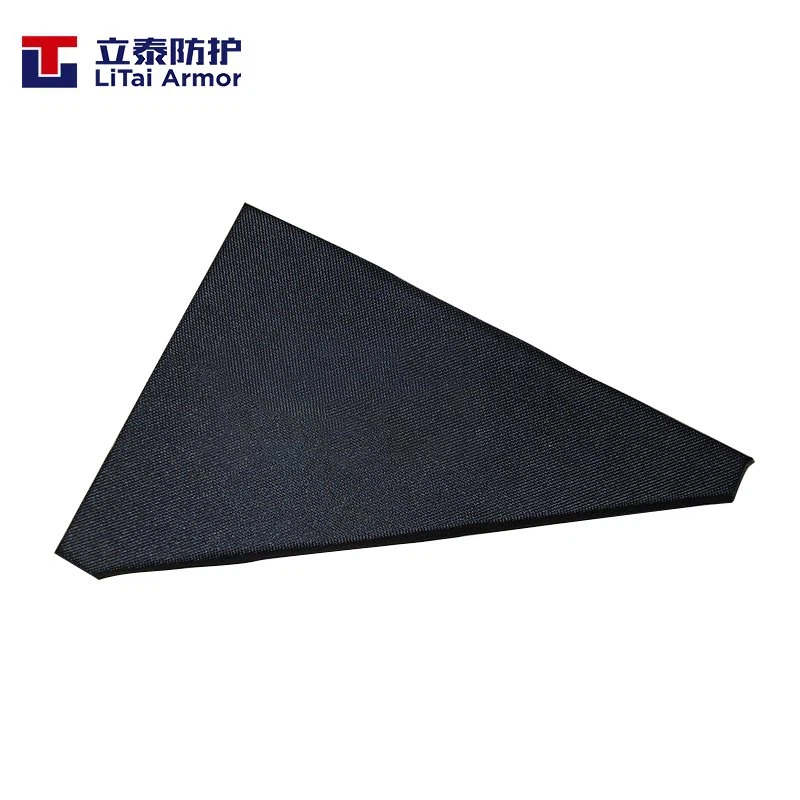

For aramid - based ballistic fabrics, the strong covalent bonds between the carbon, nitrogen, and oxygen atoms in the polymer chains hold the electrons in place. This lack of free charge carriers means that when an electric potential is applied across the fabric, there is very little movement of charge, and the electrical conductivity is negligible.
Similarly, polyethylene - based ballistic fabrics, like the Ballistic PE UD Fabric, are also non - conductive. The polyethylene molecules consist of carbon and hydrogen atoms bonded together in a stable structure. The electrons are involved in these covalent bonds and are not free to move, resulting in a low electrical conductivity.
However, there are some cases where ballistic fabrics can be made to be electrically conductive. One approach is to incorporate conductive materials into the fabric. For example, carbon nanotubes or conductive polymers can be added during the manufacturing process. These conductive additives introduce free charge carriers into the fabric, allowing it to conduct electricity.
Carbon nanotubes are extremely thin, cylindrical structures made of carbon atoms. They have excellent electrical conductivity due to the delocalized electrons in their structure. When mixed with the polymer matrix of the ballistic fabric, the carbon nanotubes form a conductive network, enabling the flow of electric current through the fabric.
Conductive polymers, on the other hand, are polymers that have been chemically modified to have conductive properties. They can be blended with the base polymer of the ballistic fabric to create a composite material with enhanced electrical conductivity.
Implications of Electrical Conductivity in Ballistic Fabrics
The electrical conductivity of ballistic fabrics has several implications in different applications.
Electrostatic Discharge (ESD) Protection
In some environments, such as those with sensitive electronic equipment or in explosive atmospheres, electrostatic discharge can be a significant problem. Non - conductive ballistic fabrics can accumulate static charge, which can lead to sudden discharges. These discharges can damage electronic components or even cause explosions in the presence of flammable gases or dust.
By using electrically conductive ballistic fabrics, the static charge can be dissipated safely. The conductive fabric acts as a path for the charge to flow to the ground, preventing the build - up of static electricity and reducing the risk of ESD - related incidents.
Electromagnetic Interference (EMI) Shielding
In modern warfare and security applications, there is a growing need to protect against electromagnetic interference. Electronic devices, such as communication systems and sensors, can be disrupted by external electromagnetic fields.
Conductive ballistic fabrics can be used as EMI shielding materials. The conductive network within the fabric can absorb and reflect electromagnetic waves, preventing them from reaching the sensitive electronic equipment. This helps to ensure the proper functioning of the devices in a high - interference environment.
Smart Textiles and Wearable Technology
The development of smart textiles and wearable technology is an emerging field. Ballistic fabrics with electrical conductivity can be integrated with sensors, actuators, and other electronic components to create smart clothing. For example, a conductive ballistic fabric could be used to measure vital signs, such as heart rate or body temperature, in a bullet - proof vest. This would provide additional functionality to the traditional ballistic protection, making it more useful in military and law enforcement applications.
Applications of Conductive Ballistic Fabrics
Military and Law Enforcement
In military and law enforcement applications, conductive ballistic fabrics can offer enhanced protection. As mentioned earlier, they can provide ESD protection and EMI shielding, which are crucial in modern combat scenarios. Additionally, the integration of smart technology into ballistic vests can provide real - time information about the wearer's health and location, improving situational awareness and safety.
Industrial and Manufacturing
In industrial settings, where workers are exposed to potential ballistic threats and need to work with sensitive electronic equipment, conductive ballistic fabrics can be used in protective clothing. This ensures that the workers are protected from projectiles while also preventing electrostatic damage to the equipment.
Conclusion
The electrical conductivity of ballistic fabric is an important property that can have significant implications in various applications. While traditional ballistic fabrics are generally non - conductive, advancements in materials science have made it possible to create conductive ballistic fabrics by incorporating conductive additives.
The ability to control the electrical conductivity of ballistic fabrics opens up new possibilities for applications in ESD protection, EMI shielding, and smart textiles. As a ballistic fabric supplier, we are constantly exploring new ways to improve the properties of our fabrics, including their electrical conductivity, to meet the evolving needs of our customers.
If you are interested in learning more about our ballistic fabrics, whether they are the traditional non - conductive types or the innovative conductive ones, we invite you to contact us for procurement and further discussions. We are committed to providing high - quality ballistic fabric solutions tailored to your specific requirements.
References
- "Handbook of Ballistic Materials and Personal Armor" by N. C. Jain
- "Conductive Polymers: Fundamentals and Applications" by R. B. Seymour and C. R. Martin
- "Carbon Nanotubes: Properties and Applications" by M. S. Dresselhaus, G. Dresselhaus, and P. C. Eklund