

As a supplier of vehicle armour, I've spent a good chunk of my career diving deep into how our products shield vehicles from kinetic energy penetrators. These penetrators are basically high - speed projectiles that rely on their speed and mass to pierce through materials. It's a wild world out there, and understanding how our armour stands up to them is crucial.
What are Kinetic Energy Penetrators?
Kinetic energy penetrators come in all shapes and sizes. They can be long, thin rods made of super - dense materials like depleted uranium or tungsten alloy. When these bad boys are fired at a vehicle, they're moving at incredibly high speeds. Think hundreds or even thousands of meters per second. The kinetic energy they carry is insane, and it's this energy that they use to try and break through the vehicle's armour.
The basic idea behind a kinetic energy penetrator is simple physics. The kinetic energy formula is (KE=\frac{1}{2}mv^{2}), where (m) is the mass of the penetrator and (v) is its velocity. So, even a relatively small penetrator can pack a huge punch if it's moving fast enough.
How Vehicle Armour Works Against Them
Material Selection
One of the first lines of defense in our vehicle armour is the choice of materials. We use a variety of high - strength materials, each with its own unique properties. For example, steel is a classic choice. It's strong, relatively cheap, and easy to work with. High - strength steel alloys can absorb a significant amount of the kinetic energy from a penetrator by deforming. When the penetrator hits the steel, the steel starts to bend and stretch, which takes energy away from the penetrator.
But steel isn't the only option. We also use composite materials. These are made up of different layers of materials, like ceramics and fibers. Ceramics are extremely hard and can shatter the tip of a kinetic energy penetrator on impact. This shattering spreads the energy of the penetrator over a larger area, reducing its ability to penetrate further. Fibers, on the other hand, can absorb and disperse the remaining energy. They're often made of materials like Kevlar or carbon fiber, which are lightweight but very strong.
Layered Design
Our vehicle armour often uses a layered design. This is like having multiple shields stacked on top of each other. The outermost layer is usually designed to deal with the initial impact. As I mentioned earlier, if it's a ceramic layer, it can break the tip of the penetrator. The next layer then has to deal with the remaining energy. This could be a layer of steel or a fiber - based composite. Each layer plays a specific role in reducing the kinetic energy of the penetrator.
For example, in some of our Armoured Police Vehicle armour, we use a three - layer design. The outer ceramic layer shatters the penetrator, the middle steel layer absorbs and distributes the energy, and the inner fiber layer catches any fragments and further reduces the energy.
Energy Dissipation
Another important aspect is energy dissipation. When a penetrator hits the armour, we don't want the energy to just stay in one place. We want it to spread out as much as possible. That's why we design our armour to have features that help with this. For instance, some of our armour has a honeycomb - like structure inside. This structure helps to channel the energy away from the point of impact, reducing the chances of a single point on the armour being overwhelmed.
Different Types of Vehicles and Their Armour Needs
Armoured Police Vehicles
Armoured Police Vehicle face a variety of threats. They might encounter small - arms fire from criminals, which could include pistols, rifles, or even shotguns. The armour on these vehicles needs to be able to stop these types of projectiles. We design our police vehicle armour to be lightweight enough so that the vehicle can still move quickly and maneuver easily, but strong enough to provide reliable protection.
SWAT Vehicles
SWAT Vehicle Armour have to deal with more serious threats. SWAT teams often go into high - risk situations where they might face more powerful firearms. Our SWAT vehicle armour is designed to be even more robust. It might use thicker layers of materials and more advanced composite designs to protect against high - velocity kinetic energy penetrators.
Patrol Cars
Patrol Car Armour also need protection, but their requirements are a bit different. They need to be able to handle smaller - caliber rounds and shrapnel. Our patrol car armour is designed to be cost - effective while still providing a good level of protection. It's often a balance between weight, cost, and protection level.

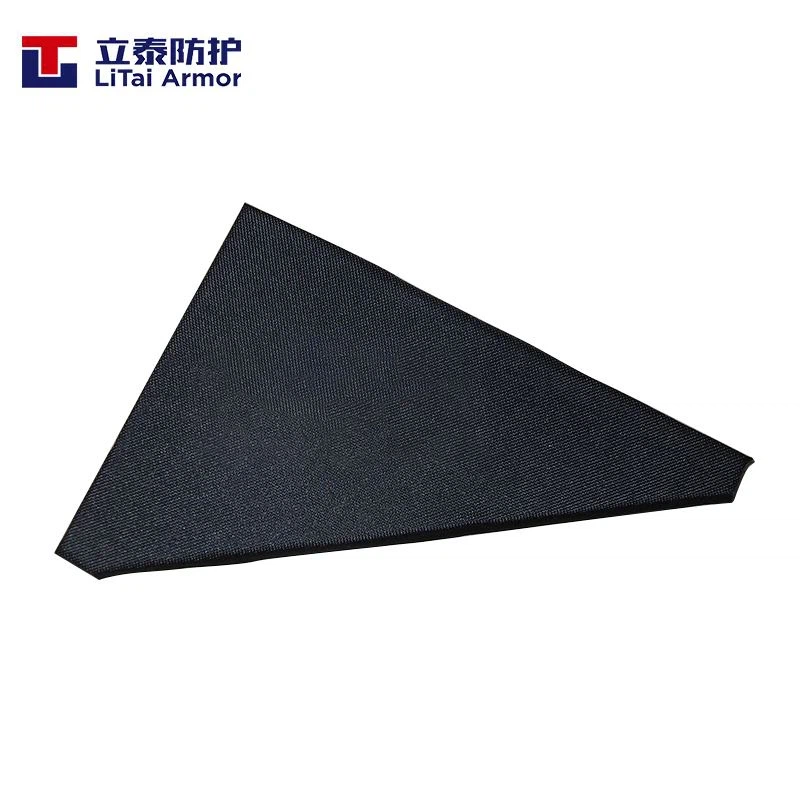
Testing and Certification
We don't just make the armour and hope it works. We put it through a rigorous testing process. We use specialized testing equipment to fire kinetic energy penetrators at our armour samples. These tests are done at different angles and velocities to simulate real - world scenarios.
We also aim for various certifications. These certifications are like a stamp of approval that our armour meets certain standards. For example, there are international standards for vehicle armour protection levels. Meeting these standards gives our customers confidence that our armour will perform as expected in the field.
Why Choose Our Vehicle Armour
We've spent years perfecting our vehicle armour technology. Our team of experts is constantly researching and developing new materials and designs to improve our products. We understand that when it comes to protecting vehicles and the people inside them, there's no room for error.
Our armour is also customizable. We know that different vehicles have different needs, and we can tailor our armour solutions to fit those specific requirements. Whether it's a small patrol car or a large armoured personnel carrier, we can provide the right level of protection.
Let's Talk
If you're in the market for vehicle armour, I'd love to have a chat with you. Whether you're looking for Armoured Police Vehicle, SWAT Vehicle Armour, or Patrol Car Armour, we can find the perfect solution for you. Contact us to start the conversation about your vehicle armour needs.
References
- "Ballistics: Theory and Design of Guns and Ammunition" by Brian P. Coates
- "Modern Armor and Anti - Armor Systems" by Steven J. Zaloga


